
Most couples hand over their footage and expect something back in a week. Some editors can do that. What you get in a week is usually obvious.
The Raw Footage Problem
A single-camera shoot is 4 to 8 hours of material. Multi-camera weddings push past 20. Before any actual editing happens, all of it needs to be ingested, sorted, synced to separate audio recordings, and organized by camera angle and timeline.
Ceremony interiors are often underexposed compared to outdoor receptions, so even that early stage flags how much corrective work is coming.
Skilled editors spend 6 to 10 hours on prep alone. You never see it. It’s also why the film holds together.
Color Grading Is Not a Filter
Getting-ready shots: window light. Ceremony: tungsten or LED. Reception: golden hour bleeding into venue string lights. None of it matches, and a preset does nothing useful here.
Skin tones are where it really shows. They read differently on camera than in person, especially under fluorescent venue lighting.
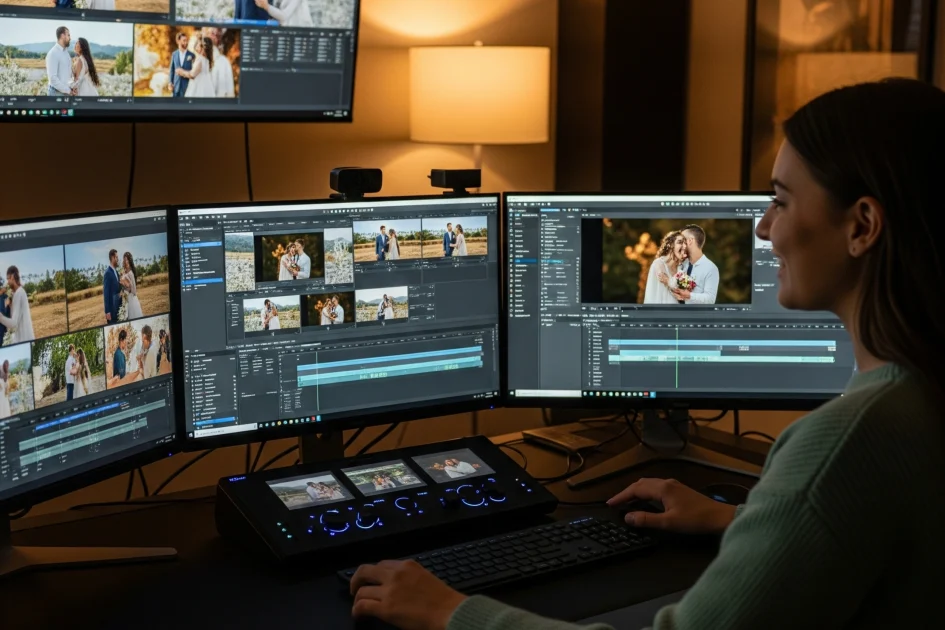
In DaVinci Resolve, a colorist goes node by node — exposure, white balance, tone curves — before anything stylistic gets touched. That process is 20 to 30 percent of total editing time. Sometimes more.
Audio Editing Changes Everything
Ceremony audio is almost always a problem. Officiant mics clip. Wind gets into outdoor vows. Crowd noise sits right on top of the rings exchange.
Editors pull everything into multi-track sessions, clean the dialogue, reduce noise, then balance the whole mix against music.
The music itself takes time. Most editors use licensed libraries — Musicbed, Artlist — to keep the film uploadable on YouTube and Instagram without copyright strikes.
Those licenses aren’t free, and they’re built into the rates of anyone doing this properly. A suspiciously low quote usually means this got skipped.
What a Professional Video Editing Service Actually Covers
A professional video editing service covers the full pipeline. Syncing, color, audio, structure, revisions. Not just someone cutting clips together.
Studios like EVEditor work exclusively in wedding post-production. They handle color grading, audio cleanup, and narrative structure with the kind of consistency that comes from doing one thing well.
If you’re a videographer looking to offload post-production, or a couple whose editor delivered raw files, it’s worth a look.
The Delivery Format Question
4K is expected now. What most couples don’t know is that a 5-minute highlight film in 4K ProRes can run over 20GB. H.264 exports are smaller but the quality depends on the settings. There’s a real difference between a careful export and a fast one.
Delivery usually goes through Frame.io or Vimeo for review, then a download link for the final file. Ask your editor upfront: how do you deliver, do you keep backups after handoff, and for how long.
One Thing Worth Knowing Before You Book
Budget editors cut the slow steps. Audio cleanup and color correction go first. On a phone the result looks fine. On a television, or projected at a screening in ten years, it doesn’t.
Ask for a full ceremony cut. Not the highlight reel. Three minutes with good music can hide a lot. The ceremony cut doesn’t hide anything.
